Wednesday, 21 December 2016

NDM case study: News on the Tweet

1) Respected news brands are good for Twitter due to the two following reasons:

  1. To be aware of what is going on in the World
  2. To be connected to people I am interested in but I don't know
These two reasons aren't exactly beneficial for the news brands, in this way, but are beneficial to the audience. However, for this to be amusing to the audience, it will bring more awareness and attraction to the news brands; The audience like to follow the respected news brands for 1 key reason and that is because of the fact that they are a reliable source since whenever news has been published, it will always be verified by those brands.

2) On the other hand, Twitter is also good for respected news brands as it is more accessible, more influential and more connected than ever before. The immediacy and accessibility of Twitter brings valuable readers to newspaper brands that they would not normally read in print or directly online.

4) The following tweets show the focus turns to 'gossip' or 'banter' on different social media sites:

  • Neil Ashton - Arsenal are toast
  • Grace Dent - Jennifer Aniston's new hair?
  • Camila Long - British Sheepskin industry
  • Dan Wootton - Red carpet awks moment from last night as my microphone chord gets stuck.
5) In my opinion, I believe that the 'gossip' and 'banter' does have an effect on the reputation of journalists. This is because of the fact that the audience want to look at something that everyone is talking about on their social media sites and I believe that journalists do not have a role in this because it may have started from someone that is just a normal person, who is always on their social media sites without any experience in journalism.

6) The report talks about the relationship between Twitter and newsbrand - They believe that since these two brands have got a good relationship between themselves, it will have a positive impact on the readers and users and the who relationship would be built on trust.

7) I strongly believe that with the development of some social media sites, such as Twitter have made a big impact on the traditional newspapers. Since social media sites like Twitter can start to provide news via links by users to other news websites and the fact that a lot of it is free, the audience would therefore start to buy less newspapers and start using their smartphones more often. The audience may also believe that using the social media sites is a much more quicker service because if you were to type something in the search engine, by using the specific word of the article you may want to read, the result of the search the audience may be looking for will most likely come up as well. Therefore, this means that there have been a major drop in sales for the traditional newspapers, and then means that there will slowly go out of business. To conclude, this means that social media sites have had an impact on traditional newspapers.

8) Since the users on Facebook have started to provide fake news to the other users, it would be hard to start to stop this from happening due to the fact that any user on Facebook is eligible to post whatever they want to on there. However, I believe that Facebook can prevent this from happening with the news brands so the users can see that they are reliable. 

Wednesday, 14 December 2016

NDM News: end of unit index

1) Institution: the impact of Google on the newspaper industry
2) Ofcom report: how news consumption has changed
3) The future of newspapers: Build The Wall analysis
4) The decline of newspapers: the effect of online technology
5) The future of journalism: John Oliver and Clay Shirky
6) The decline of newspapers: Media Magazine case studies
7) Citizen journalism and hyper-reality: Media Magazine article and questions
8) News Values: theory and updating them for digital media landcape
9) Marxism & Pluralism: Media Magazine article and questions
10) Alain de Botton on the News: lecture and questions
11) Full NDM essay including paragraphs on Marxism and Pluralism
12) Globalisation and news: cultural imperialism
13) Globalisation: taking it further (Google Glass case study and capitalism)
14) Fake news and globalisation - Guardian and New York Times articles
15) News on the Tweet

NDM STORY INDEX (1-28)

  1. Nudity and Facebook's censors have a long history 

  2. Netflix paid less than £400,000 in UK corporation tax last year

  3. Back to the future: were newspaper publishers wrong to go digital?

  4. Help! I'm caught in a Twitter war and I'm losing (27)

Tuesday, 13 December 2016

13/12/16 - Ray Tindle spins away, but journalism will die without a strategy (28)

https://www.theguardian.com/media/greenslade/2016/dec/13/ray-tindle-spins-away-but-journalism-will-die-without-a-strategy

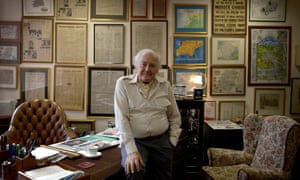
Sir Ray Tindle: he always smiles through adversity.

This article has been evolved around this one man called Ray Tindle. He is a founder of an eponymous newspaper group and is aged 91. In additon, Tindle still carries on with his job despite being diagnosed with throat cancer 20 years ago and has been without a voicebox ever since. The writer talks about what Tindle's beliefs are and find them to be false and tries to talk about the things where the writer believes that Tindle is wrong. First of all, Tindle believes that the newspaper platform (print) is not a dying media and he believes that he can save many different newspaper companies through the use of advertising. However, the writer talks about how the newspapers are never going to go back up and everyone will now be using technology; he gave three different examples: 1)You write that “better newspapers are emerging” as the result of lessons learned and “a more viable, more effective press” is in the process of “arising.”  2) You write that local media are around “in great strength because they are doing a necessary, positive, effective job.”  3)You write of “other forms of media” (meaning digital) that now exist and “will run alongside our newspapers but they will not supplant them.”
  • As owner of more than 220 local titles across Britain, the Tindle group is one of the country’s top 10 newspaper publishers and has been responsible for launches and for rescuing papers unwanted by other outfits.
In my opinion, I believe that Tindle is entitled to his opinion about believing that the print platform can become successful again. However, from my point of view, I agree with the writer and believe that this will never be the case again with the great impact that new/digital media has had on the media. For example, people nowadays get their news on social media sites such as Twitter and Facebook; no one will ever make a switch again because of the fact that social media sites are quicker as they will not need to wait till the next day to receive their news and this also leads to the social media sites being more active that the print platform. Since everyone is so use to using their mobile phones, tablets etc to check their news (in a routine) no one will ever want to make the switch again, simply because of the fact that it is more simpler and easier to use, despite the cost but only to some extent this may be a problem.

13/12/16 - Help! I'm caught in a Twitter war and I'm losing (27)

https://www.theguardian.com/culture/2016/dec/09/help-im-caught-in-a-twitter-war-and-im-losing

Man blocking ears

This article is reflecting all the difficult times users have with Twitter. Although it is one of the most popular social media sites in the whole world, there are many consequences which users sometimes have to take with it; Nowadays, if you post something that you deeply believe in which may be controversial, people may then start an argument and therefore, you have to stick to what you have said and reply back to the users to make your point. The writer also says that 'it's not something you want to be doing on social media site' but it's something that goes with the package of using this social media site. A lot of the time, people may right something which is racist or sexist but the other users haven't got the power to stop them from doing that since Twitter enables anyone to type anything they want to. In addition, it also says that it’s an unsettling experience, being on the receiving end of often personal criticism from tens, if not hundreds, sometimes thousands of people.Not every tweet sent your way may be abusive or even snarky, but in the worst cases the onslaught reaches a critical mass where you simply feel overwhelmed and defensive.
  • When your risk of being misunderstood is so high, I suggest a succinct but honest response. Own up to what you’ve gotten wrong, but do not reply to every tweet, definitely not any from faceless Twitter “eggs”.
  • In fact, it’s been called a “dying medium”.
At the ending of the article, the writer stated that Twitter is a 'dying medium'. In my opinion, I disagree with this statement and believe that it is still an upcoming industry that has still got a lot more to improve. Technology is improving and Twitter is the main cause of this and is a strong reason why there are people such as citizen journalists etc. Furthermore, linking to the whole article, I believe that the users can't do anything about it and should just not think about it as it is in the hands of those specific users that may write the inaccurate and controversial things. We have signed up to a social media sites where we would expect things like this and shouldn't think anything more of it. Twitter is still a better platform than print as it gives the people to write their thoughts and share it with others, where also the other users can give the views on a certain topic etc. Therefore, linking back to the article title, I don't think that anyone is being 'caught in a Twitter war' but they are just being told something which other users may believe in which is allowed.

Monday, 12 December 2016

NDM News: Globalisation and fake news

The Guardian & the global problem of fake news

1) A number of countries such as Germany, France, Myanmar, India and much more are all similar in the sense that they all have been effected by the increase in Fake News. For example, in Myanmar, a Muslim journalist was recently the victim of a campaign by some of these accounts, when a widely followed nationalist posted pictures of him juxtaposed with images of an unknown Rohingya Muslim militant. The post claimed he was involved in attacks on border police and called for his immediate arrest. But, after they had arrested him, nothing happened and the post on Facebook was removed. However, since the people have identified that the specific stories are fake news, they still believe that there is a chance that it may be true and people start to question themselves if it is true or not and therefore become confused.

2) I believe that with the "culture of freedom and innovation" has had a great impact in fake news. First of all, I believe that with the freedom, the audience have had the access to post and share the views as much as they want to. This then leads to people having different views since they believe that whatever they see on the internet is true and then changes what they believe in. However, what they do not know is that since anyone can post anything, there could be a chance that the news given is fake but no one hardly checks whether or not it is true which leads to the fake news happening frequently and I believe that it can't be changed.

New York Times and the creation of fake news

1) Which fake news stories were particularly successful for Beqa Latsabidze, the 22-year-old student in Tbilisi, Georgia, who tried to make money from web articles on Trump? 

The fake news stories that were particularly successful for Beqa Latsabidze was the story that was talking about the US Presidential elections and whom were pro-Trump. Donald Trump's flagship pro-Trump website, departed.co, gained remarkable traction in a crowded field in the prelude to the Nov. 8 election thanks to steady menu of relentlessly pro-Trump and anti-Clinton stories. He also went on to say, “My audience likes Trump,” he said. “I don’t want to write bad things about Trump. If I write fake stories about Trump, I lose my audience.”

2) I believe that to some extent, Facebook and Google can be blamed for the rise in fake news but not as much. For example, Facebook allow their users to post whatever they want to onto the social media sites and even if it is something that may be misleading, Facebook will not be able to do anything about that because of the fact that Facebook have over a billion users and they will not be able to look at everyone's account to check if it fake. In addition, despite that it is being some of their fault they have tried to find ways in which they can prevent it from happening. For example, Google announced that it would ban websites that host fake news from using its online advertising service, while Facebook’s chief executive, Mark Zuckerberg, outlined some of the options his company was considering, including simpler ways for users to flag suspicious content.

Sunday, 11 December 2016

Globalisation and news

1) In my opinion, I believe that the British news has been effected massively by the American Cultural Imperialism. For example, there are many different things that are being produced which we all look at daily but what the British people don't know is, that a lot of them are owned by American companies. We have now become very reliant and dependent on the US culture on news etc.

2) I believe that the increased globalization of news has improved the audiences experience. This is because of the fact that there is a lot more content in which the audience can now view and now can find out a lot of what is going on in the different countries we would've normally been interested in. A lot of this has come through the use of citizen journalism as nowadays, anyone can post reliant news on different social media sites and can also sell it onto the very reliant news companies such as BBC news. In addition, whoever has got access to the internet means that anyone around the world can explore what is happening in the other countries and this is why McLuhan came up with the 'Global Village'.

3) To some extent, I believe that globalisation has damaged a lot of news institutions especially our home grown institutions. With the use of globalisation, American companies have now started to take over a lot of British companies since they have become the dominant country in terms of the upgrade in technology; Most of the major technology institutions are American grown and nowadays, we have become very reliant on what others have started to produced other than what us (Britain) are doing.