Sunday, 9 October 2016

NDM: The decline of the newspaper industry

The Future of Newspapers

The article is about the decline in the newspaper industry. Throughout the article, it talks about how the internet has effected the newspapers and how the revenue of the newspapers is falling massively. It also gave many outstanding statistics, for example the number of people that worked for the Newspaper Association of America had fell by 18% between 1990 and 2004. In addition, the article also goes into talking about 'citizen journalists' and bloggers themselves, talking about how they are all opinionated and is done 'unprofessionally'. For example, bloggers are just normal people that sit behind a screen on an armchair. Despite there being a great fall of newspapers in America, Europe, Australia and New Zealand, the sales are, yet, still rising in all the other countries but that is due to the lack of not having a great amount of NDM in those specific locations. Also, it goes on to say that the popular newspaper companies like the New York Times, should increase the price of their journalists as there has already been a major loss in revenue to the internet.

1) In my opinion, I do believe that this is a 'cause for concern but not for panic'. This is because of the fact that not enough information will be distributed to the public since there will eventually be a huge decline in the newspapers industry and in journalism. If there is a decline in newspapers, the information that is distributed online could potentially be misleading since there will be a lack of gate keepers etc. This is the same for journalism as there would be no one to be reporting the news to the different companies and will also just be done unprofessionally.

2) To some extent, I do believe that the writer's predictions are true but also has been quite inaccurate so far. In the article, it says that in specific countries, the newspapers sales are still rising. However, if you take a country like, Spain for example, print is starting to die there and they are becoming a country where using a mobile phone is more popular to look at the news. In addition, in France, they had recently launched a Snapchat feature where on the discovery page, the new feature is that the French viewers can look at newspaper articles which are very popular in France. 

3) Many organisations such as Carnegie and the Guardian have respected that high quality journalists will be backed up by non profitable organisations. A key example of this could be a high quality journalist which adds all of their research and whatever they have found onto Twitter. Journalists wouldn't be making money with what they post as nor would Twitter as it would be an ordinary person with no organisations they're working for; it cannot be profited from then. However, Twitter can still make their own profits from different sorts of advertising. In addition, the Guardian is owned by a British company that is called the Scott Trust Limited.

Tuesday, 4 October 2016

04/10/16 - New research shows there's one big change when cops wear cameras (8)

qz.com/795755/complaints-against-police-fell-by-98-after-they-were-given-body-cameras-according-to-a-new-study/

Chicago police body camera

This article is about how police officers in 32 states in the United States of America will have cameras built into their uniforms. These cameras are created to have an effect on both the public people and the police officers. It also talks about how 'Cambridge University' done their own research about how this will effect the behaviour of police officers and the public. After there research, it was shown that since the cameras have been installed into the uniforms, there has been a major decrease in the number of complaints by each of the public and police officers. Since everyone is being monitored in an incident, the behaviour of everyone is much more better as they know that they are going to be recorded by the cameras. The main purpose of these cameras are to stop the police officers from being abused and attacked by the 'criminals'.
  • Before the cameras, there would be roughly between 1400 and 1600 number of complaints against police officers.
  • Compared to the previous year when cameras were not worn, complaints across the seven regions fell by 93% over the 12 months of the experiment. The study encompassed nearly 1.5 million officer hours across more than 4,000 shifts.
  • After the cameras' the number had dropped to under 200 complaints, which has had a major impact in the characters of police officers.
In my opinion, I believe that the idea of having these cameras on the uniforms is a great idea. This is because of the fact that everyone and everything will be acted and taken into account in a fair manner. For example, if there is an incident, the police officers cannot be harsh on those particular people if they haven't done anything wrong. Sometimes, police officers take things too far as they believe that they have more power than the public. Therefore, these cameras will affect their behaviour in a good way and is an advantage to the public because they will be treated in a positive way too. Also, researchers have proved that this idea has worked because the complaints against the officers have massively dropped.

04/10/16 - Twitter pays £1.24m in UK tax as revenues increase by 30.5% (7)

https://www.theguardian.com/technology/2016/oct/03/twitter-uk-tax-revenues-staff-shares-2015-results


The article above is about how people believe that Twitter do not pay enough tax and try to avoid paying tax as much as they can. A way in which they do this is by locating their Headquarters in London but moving their money to Ireland. However, a Twitter spokesman went on to say that they haven't avoided pay tax and went on to talk about how they had employed 163 people last year, in 2015, which is an increase for the previous year (126 were employed). With those statistics, the spokesman also backed these statistics by talking about how each employer is worth about £108,000 and altogether costed Twitter roughly £18 million.  Finally, the spokesman also went on to say that they do not avoid tax and they do pay all taxes required in the UK, which is what Twitter is highly criticised for.

  • Twitter UK made a £3.36m pre-tax profit last year, up from £3.29m in 2014.
  • On average, each staff member cost almost £108,000.
  • Twitter’s British operation paid £1.24m in tax last year as staff enjoyed a £12.5m shares windfall.
  • The company set aside £12.5m to cover the cost of shares for employees, down from £14m in 2014.

In my opinion, i believe that Twitter are just trying to keep themselves clear from any speculations and criticism. Since they move their money around from land to land, it is highly believable that they are trying to avoid paying tax. Therefore, I believe that what they are doing is wrong. Since they are a wealthy and upcoming company, I do believe that this is a wrong thing but them trying to avoid taxes; Mainly because of the fact that less wealthier people, who which work for a much less amount still have to do their duty and pay taxes to the government. So, I believe that if you are a wealthy company like Twitter, then you should pay taxes and not try to escape it because this is an unfair thing to do.

Sunday, 2 October 2016

NDM baseline assessment learner response

Feedback

WWW- Good information of focus of the research/ studies we covered
EBI- A theme you missed of the section you'd planned on video games. Also, more information needed (e.g. Paretos law)
-You need to speed up a bit!

LR Paragraph

Views and values, in the audience, has changed through the impact in violent video games. Many of the younger audience play a lot of violent games on their consoles. A popular violent video game is 'Grand Theft Auto' (GTA). Many of the audience, especially the parents of the younger users of this specific game, are against this game and a lot of other violent games. This is because of the fact that audiences between the ages of 9-16, would play a game which is rated 18+ and therefore would have an impact on the younger audiences lives. Due to the younger users playing these specific games can create a moral panic within the society of parents and they would be unsure of what to do; since they are children playing an adult game, creates tension and the older audiences may believe that they would be getting up to no good. On some occasions, violent video games can have a great impact on the younger audiences, e.g. GTA is about crime and fighting and this may persuade the younger audience to live the life as in the video game, which can also potentially lead to dangerous things. In addition, when the game GTA had been released, there would be some scenes where young children would have killed someone and this was due to the fact that they had learnt to kill on the video game. For example, in the US a 14 year old boy had killed his father and brother because he was acting as a video game character in real life. Therefore, video games has got a huge impact on the lives of the younger audiences as it inspires them to act in that specific way; this can lead to corrupted minds as they are young and are still learning between right and wrong.

NDM case study: How has news changed?

Ofcom report into news consumption 2015

1) Notes

  • Nine in ten adults in the UK (89%) say that they follow news
  • Television is by far the most-used platform for news, with 67% of UK adults saying they use TV as a source of news. However, there has been an eight percentage point decrease since 2014 (75%), following a three percentage point decrease between 2013 (78%) and 2014 .
  • Looking within each platform at the different sources of news people might use, the number of people who use just one source remained at a similar level to 2014; 44% of TV users said they used just one source (42% in 2014) compared with 43% of internet users (45% in 2014), 34% for newspapers (35% in 2014) and 60% for radio (62% in 2014)
  • The top two news sources, in terms of reach among UK adults, are both TV channels. BBC One is by far the most-used (at 48%), followed by ITV/ ITV Wales/ UTV/ STV News, wiith just over a quarter (27%) of people saying they use it as a source of news. BBC One has had a five percentage point decrease in reach since 2014 (53%).
  • People aged 16-24 each watched just 25 hours of news on television in 2014, compared to 189 hours for those aged 55 and over.
  • More than seven in ten (72%) adults who use television for news use BBC One, a figure largely unchanged since 2014 (71%) and 2013
  • According to NRS figures, the reach of national newspapers has declined considerably in the past ten years, with reach among adults falling by 27 percentage points since 2005 (from 72.4% of all adults in 2005 to 45.4% in 2015)
  • When print and online readership is combined, the Daily Mail is the most widely-read news title in the UK, with around 5.5 million users.
  • Four in ten (41%) UK adults say they use the internet for news. Six in ten (59%) UK adults aged 16-24 say they use the internet or apps for news, compared to just under a quarter (23%) of those aged 55+. Over half (53%) of those in the ABC1 socio-economic group use online sources for news, compared to a third (32%) of those in the C2DE socio-economic group. Men are more likely than women to say they use internet for news (45% vs. 37%). 

2) The most popular platform for the audience to access news is from television. 67% of the UK adults use TV as their main source of news. However, since 2013 there has been an 11% decrease which meant that in 2013, 78% of the adults would consume their news on TV. 

3) People that are aged 55+ would consume their news on either TV, radio or on the newspaper; They would hardly ever use the internet for looking up the news. 86% of those who are aged 55+ would look up the news on TV. 44% of them would look up the newspaper, 37% would use the radio and 23% would view the news on the internet. 

In comparison, the majority of the users that are aged between 16-24 would look at the news via the internet. 51% of the audience in this age category would look at the news on TV, 21% would look at the news on the newspaper, 23% on the radio and 59% on the internet or other technology devices. As you can see, there is a great comparison between the younger and older audience; the majority of young users would use the internet to get their news and the older audience would either use the newspaper or TV to check the news.

4) As shown in the document, people in the AB socio-economic group are more likely to consume the news in those four categories than those in the DE socio-economic group:    TV (71% vs 67%), the internet (50% vs 29%), newspapers (38% vs 26%) and the radio (46% vs 23%).

5) In comparison to 2014, there isn't a huge change in the amount of users that use different sources of media: 44% of the users use TV (42% in 2014), 43% of internet users (45% in 2014), 34% of newspaper users (35% in 2014) and 60% for radio (62% in 2014). As you can see, there is a difference between 2016 and 2014 in every platform whether it is going up or down. 

In addition, the two top main sources of TV in the UK are BBC and ITV. BBC One is the most used sources for news (48%) which is then followed by ITV at 27%. As you can see, BBC One is leading the race by a long-shot. This is mainly due to the fact that the BBC is seemed to be more reliable and trustworthy as it is also controlled by the government who give a balanced point and a good amount of stories to look at.

6) From 2013, we have seen the total hours of national and international news viewing decrease. In 2014, each adult had watched an estimate of 108 hours of national and international news. However, these statistics were a decease from the previous year (2013). In 2013, we saw that the average number of hours was 115 and this was another 13 hour decrease from 2011.

7) Since 2005, the consumption in newspapers has dropped massively. The decrease in the past 10 years had lead to a 27% decrease. 72.4% of adults would consume news from newspapers but this has now dropped to 45.4% (2015).

8) Since 2014, the average number of users that read the newspapers hasn't really changed over the years (48.1% in 2014). However, there is a big difference within the age of the audience; 29.3% of the audience that are aged between 15-24 read newspapers compared to the 67.9% of users that are aged 65+.

9) In the newspapers and online print platforms, the most successful industry is the Daily Mail. Alongside the Daily Mail, their rivals are the Sun. Online, the Sun would charge the audience to view their content where as the Daily Mail allow their audience to read their articles for free.

10) In terms of age, 41% of UK adults use the internet for news compared to the 59% of adults aged between 16-24 that use the internet for news. Also, 23% of 55+ year old also use the internet. Furthermore, in the socio-economic group of ABC1, 53% use online sources for news compared to the 32% of those in the C2DE socio-economic group. Also, more men consume the news through the internet than what women do (45% vs 37%).

11) Around 43% respondents said that they use social media sites to consume the news. The audience that lies in the DE socio economic group will most likely use these particular social media sites that the audience in the AB category (52% vs 40%). In addition, around 61% of those that are aged between 16-24 would also use these sites too.

12) 10% of users are researched to find their news on social media sites ONLY.

13) The most popular sites online which people would use to look at the news is the Daily Mail and the Sun as said before. The Daily Mail would let the users view the content for free but the Sun charge.

14) 61% of users aged between 16-24 use the internet for news and view their news on social media sites too. Roughly, 16% of those 61% only use the social media sites for the news.

15) More than a third of online news users say the go to the homepage of a news provider by using an app (36%). In addition, 28% say they often go to news story's via links that have been shared on social media websites.

New/Digital Media: Audience and Institution

16) One of the main benefits from the changes in new and digital media on news industries for the audience is the online sources. Nowadays, the big news companies such as the Daily Mail have started to use the internet to share the news. This is beneficial to the younger audience as they are the ones who use the internet more than the older audience; When they are travelling on the way to work or school, they could go onto these internet apps and use it whenever they want. Another benefit is that it's usually free and no need to find the actual newspaper because it will be on your phone or tablet etc.

17) The larger news industries will have a great benefit from the result of news and digital media. For example, the Daily Mail is a the largest news industry in the UK. Since the Daily Mail has got it's new online source, this will attract a larger audience and therefore more people would start to read the daily mail because of the fact it is making more people aware. The audience can become aware from different social media sites, where people they may know might share links from the Daily Mail and onto that specific social media site.

18) One of the downsides for an online source for news is that it may not be protected; anyone can write up their article and will not be checked which can lead to it not be censored etc. Another downside is that if the audiences are more interested in the Sun, they would have to pay to view the Sun online as it has it's own paywall and therefore, people would have to keep reading the newspapers as it is cheaper and free.

19) The downsides for the industries is that they will be losing out on a lot of sales due to the fact that NDM has taken over. Since there is a decline in print, less people would like to read the newspapers and more of the audience like to read the news online. Therefore, this would be leading to a waste of money for the industry as they still print of newspapers which hardly make any sales.

20) In my opinion, I believe that the audience have benefited the most from the changes in news and digital media. One of the main reasons I believe that the audience has benefited the most is because of the fact that it's more accessible rather than having to get the actual news via print. Since there has been a massive change over the past 20 years, more and more users have started to use social media sites to find the news. This is very beneficial because these users are already on these social media sites, talking to their friends and this is just another way in which the news can be shown. Another benefit is that it is more cheaper than having to buy the print version and sometimes, it can be free so therefore, for the younger audience, I believe that this is much better.

Tuesday, 27 September 2016

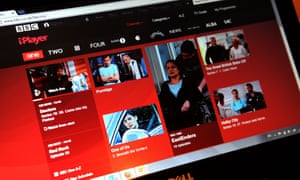
27/09/16 - BBC denies iPlayer password plans are part of licence fee crackdown (6)

https://www.theguardian.com/media/2016/sep/27/bbc-iplayer-password-tv-licence-fee


Viewers now have to confirm they have a TV licence before they can catch up on shows on BBC iPlayer.

The article above shows a debate between the BBC and their audience that uses BBC iPlayer for free, without a TV license. Since a lot of people who use iPlayer for free, the BBC have now came up with a way in which the BBC can stop them from using it without a TV license. They have come up with the idea to add a password to it, so people who use the iPlayer and have a TV license can still view their soaps etc but with a password. However, the BBC are still researching on this investigation and therefore, the password idea will not happen until 2017. A BBC spokesman was interview and this was their response to this: A BBC spokesman said: “There are no current plans for passwords to be used for enforcement but that could change.” The article also talks about how they want the BBC to be personal to the audience.
  • A password will be added to those who don't have a TV license
  • Many people use the iPlayer without a TV license
  • The password setting will be added in 2017
In my opinion, I believe that the password setting is a good idea. This is because of the fact that people are getting BBC iPlayer for free and some of the audience are having to pay for it. Therefore, I believe that this is unfair and if some of the audience have to pay for it, then everyone should pay if they want to view it. In addition, I also believe that the whole idea of charging the audience to view BBC iPlayer is a bad thing. I think this because ever since iPlayer was found, it was always free and no one had a problem with it costing. However, now that everything is in demand, all of a sudden they went to charge everyone. There are many arguments about the fact that this is the only on demand source that has gone from being free to charging the audience; the only reason it was very popular is because of the fact that it is free. Therefore, this is why I believe that this is bad idea.

27/09/16 - Snapchat unveils $130 connected sunglasses and rebrands as Snap, Inc. (5)


This article is about Snapchat introducing their first hardware item. The item itself is a brand new experience for the people who will be buying it; they're sunglasses that allow people to record and view videos and pictures on Snapchat but by only using the sunglasses and not their mobile phones. Many people think that this is a positive idea as this is a brand new thing and is much cheaper than something similar to what Google had came up with. Google had invented the Google classes but it turned out to be 10 times more expensive and therefore, not that many buyers would invest in this product. So, these Snapchat sunglasses are a new way to view photos.
  • 150 million daily users on Snapchat.
  • The sunglasses can record 10 second snippet videos.
  • The camera itself can employ a 115 degree lens.
  • The Google glasses were priced at $1500 and the Snapchat glasses will be revealed at $130.
In my opinion, I believe that this idea on a brand new product is a very good idea. As shown in the article, there has been a product like this that was invented. However, this is a product that will allow more of the audience to use a product like this due to it being so cheap. Also, the effects on this new product is also very positive; People can live their experience and actually feel it as they're using it. On the other hand, I also believe that this is a very bad idea on inventing a product like this since they're are many disadvantages, e.g. safe and healthy hazards. One example is that if the audience are using this product out on the streets, there is a possibility that they can be involved in an accident; if they're are walking on the road and are crossing over without looking and paying more attention to their Snapchat glasses, there could be major consequences.